
playbook
How Brave grew to 5M users with minimal tracking
Discover how Brave grew from 1M to 5M users without data, attribution tools, or retargeting—just crypto rewards, community trust, and a mission to fix the broken internet. A tactical guide for founders building growth loops in privacy-first or data-constrained environments.

VP of Marketing

What you’ll learn
Why Brave’s founder saw the modern internet as broken and how that shaped the product
How Brave turned crypto tokens into a viral acquisition engine
Why cost-per-install pricing still has teeth in the browser wars
How they built a thriving referral ecosystem without attribution
What founders can learn from building trust instead of data
More about the expert
James Ryan joined Brave as VP of Marketing in 2018 as its first true marketing hire, walking into a browser that was growing fast but flying blind. There was no analytics stack. No attribution platform. No CRM. Just a mission, a passionate user base, and a giant pool of crypto tokens from a successful ICO.

He had already scaled multiple mobile startups in previous roles. At Brave, he had to rethink everything he knew about growth starting from zero.
This playbook breaks down how James and his lean team grew Brave’s user base from 1M to 5M monthly average users, turned tokens into user acquisition fuel, and hacked growth the old-school way.
Undoing the internet’s surveillance script
Brave’s origin isn’t just technical. It’s personal.
Brendan Eich, the founder of Brave, is the same person who created JavaScript and co-founded Mozilla Firefox. He helped build the foundations of the modern web both good and bad. JavaScript made the internet dynamic. It also made user tracking and invasive advertising possible.
Over time, Eich grew disillusioned. What started as a tool for better content became a machine for surveillance. Websites tracked users with cookies. Ads followed you across the internet. Privacy was no longer a default. It was a luxury.
So Brave became his counterpunch. A browser that blocked trackers by default, paid users for their attention, and flipped the model from extraction to empowerment.
Brave’s core philosophy has always been privacy by default.
That belief system didn’t just shape the product. It shaped the growth playbook where James comes in.
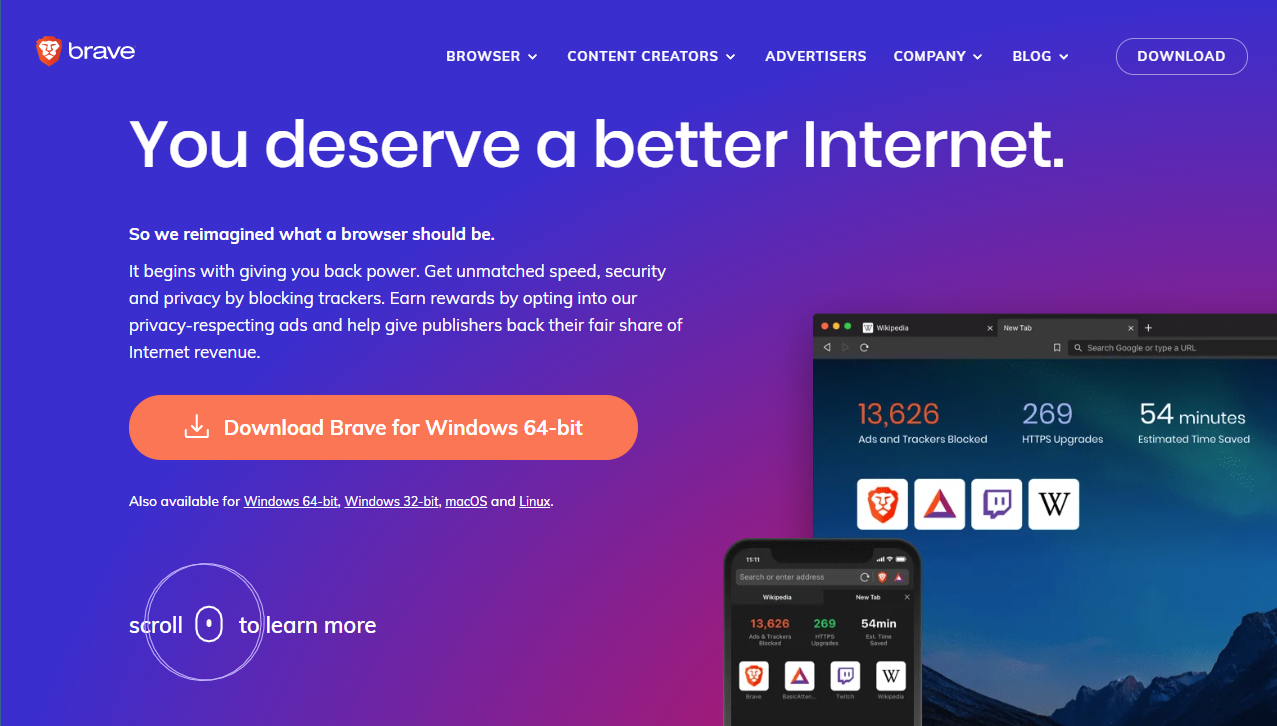
The referral engine with no tracking
Since Brave refused to collect user data, this meant that James and his team were working with:
- Zero data
- Zero attribution tools like Adjust
- Zero retargeting
- Zero funnel analysis
In most startups, this would be disastrous. But James saw it as a creative constraint. If you can’t measure every user click, you have to earn every user’s trust.
So Brave leaned on what it did have: a massive pool of BAT (BAT—Basic Attention Tokens) and a user base that cared about ethics, not optimization.
They launched a simple offer:
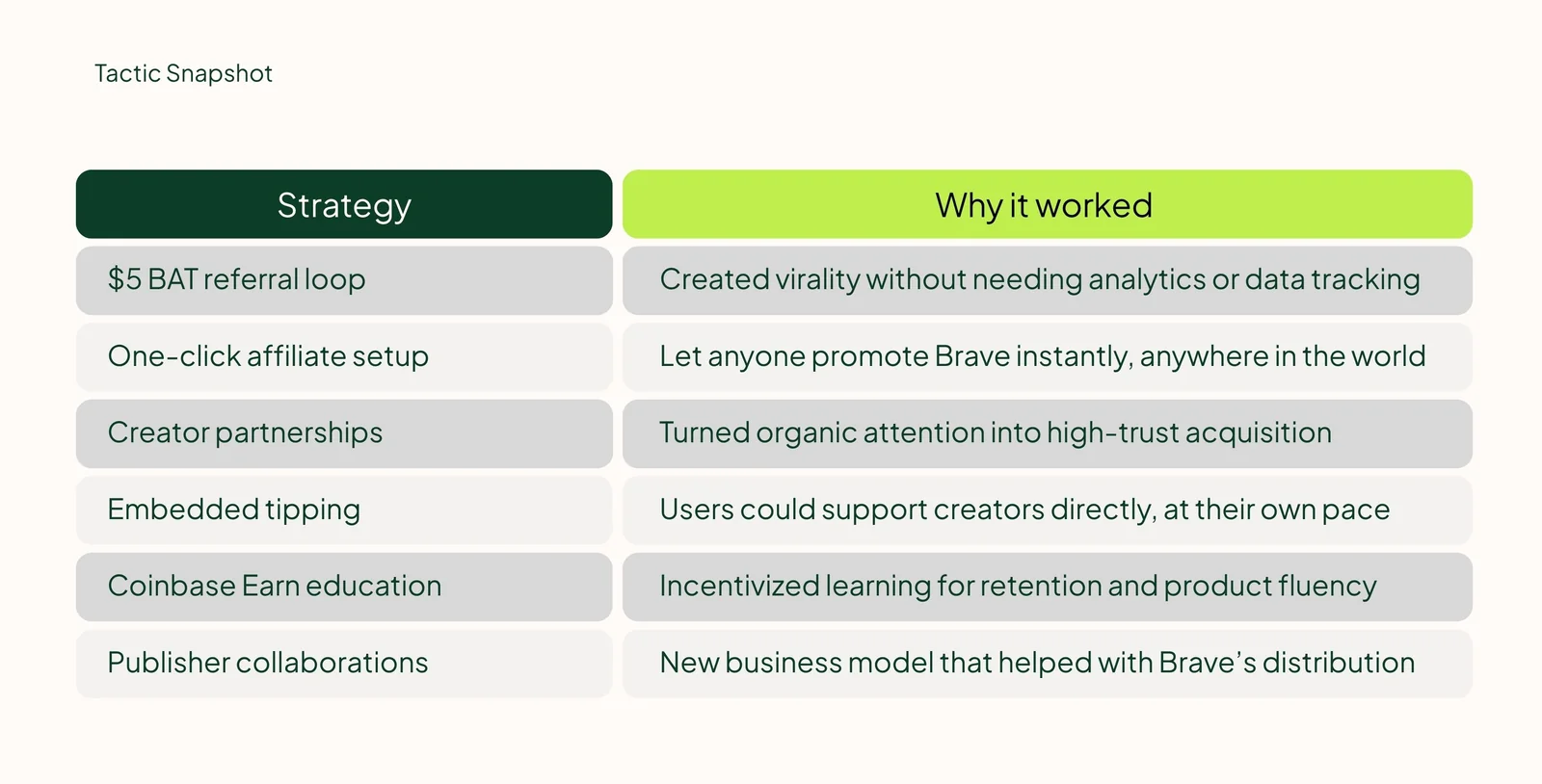
- Refer a friend, earn $5 in BAT
- Friend installs Brave, gets $5 too
They got rid of complicated tiers and geographic pricing. One rule for everyone. Clean, fast, and globally scalable.
This simplicity turned users into affiliates and created an organic loop. If you liked Brave, you shared it. If someone clicked, you both got rewarded. And Brave grew.
Why Brave didn’t try to beat Chrome
Brave never set out to compete directly with Chrome. Google has full control of the browser market, search distribution, and ad revenue. Trying to out-spend them would be a losing battle.
Brave took another route.
Instead, they focused on:
- Crypto users who already understood the BAT model
- Privacy-first users fed up with surveillance capitalism
- Tech-savvy creators and publishers looking for new revenue
This wasn't about market share. It was about owning a corner of the web no one else served. Once Brave found that wedge, growth followed.
The creator flywheel
Brave didn’t just incentivize users. It turned creators into distribution channels.
James and his team looked for creators who were already talking about Brave. Then they reached out directly, helped them set up wallets, and onboarded them into Brave’s referral and tipping systems.
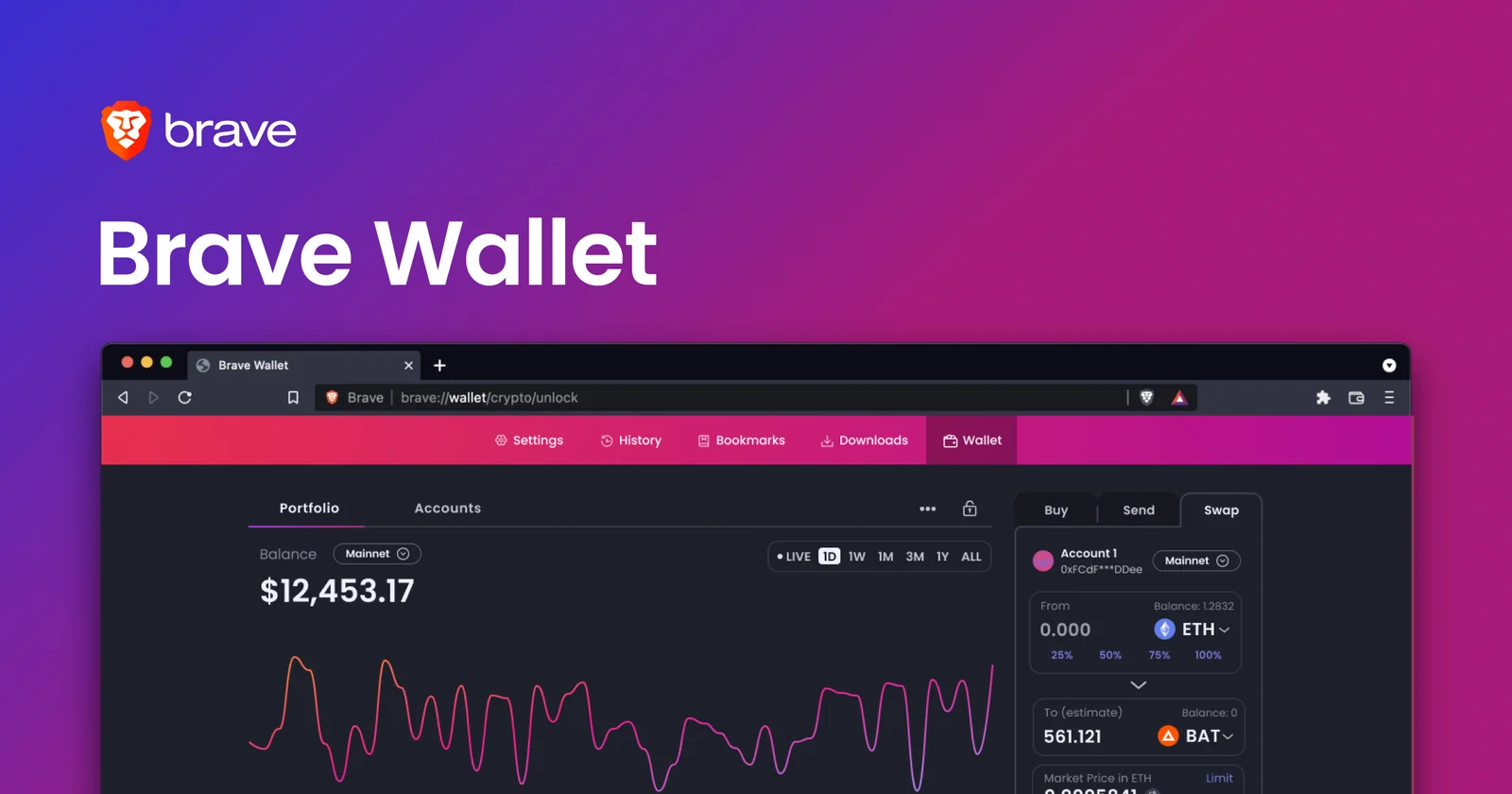
Users could tip these creators directly with BAT. Creators could earn from ads and referrals without selling their audiences to third-party trackers.
This system made creators loyal. They got paid in a way that aligned with their values. And they evangelized Brave to their fans because it benefited everyone involved.
Creators drove 10–15% of Brave’s growth during this phase.
When education was the funnel
Most people in 2018 didn’t understand wallets or tokens. So Brave didn’t just reward users, they educated them.
A standout tactic that James leaned in on was the Coinbase Earn campaign:
- Users watched short videos about Brave and BAT
- After each video, they got token rewards
- By the end, they understood how the product worked—and had skin in the game
This embedded learning approach turned passive users into active participants. Once someone had tokens in their wallet, they were far more likely to engage, refer others, and stick around.
The publisher play
Tech publishers were losing ad revenue fast, mostly because their own readers used ad blockers. Brave offered a win-win.
With their browser, publishers could:
- Join Brave’s network
- Get tipped directly by readers
- Earn from Brave’s privacy-first ad network
Brave got co-marketing support and distribution. Publishers got a new revenue stream. Both parties gained.
James leaned on this loop by personally recruiting niche sites that were already hurting from traditional ad models. The pitch was clear: Brave doesn’t just block ads—it helps replace them. Under heavy regulation, of course.
What founders can steal today
- If you can’t track, build trust. Brave grew by aligning incentives, not optimizing funnels.
- Simplify the offer. One flat reward, one onboarding flow. Complexity kills momentum.
- Look for who’s already talking about you. Organic mentions are the best signals for partnerships.
- Don’t chase your competitor’s market. Find your niche, speak directly to them, and dominate it.
- Educate your users inside the product. Learning = engagement = retention.
Founder’s take
“At Brave, not tracking users wasn’t a bug. It was the feature. And they built a growth system that made it work.”
- Jonathan Martinez, GrowthPair Co-Founder
Brave didn’t have the tools most startups think are essential: attribution dashboards, performance marketing, or conversion funnels. What they had was a clear belief system and a product that stood for something.
And that’s what made the growth work.
This playbook shows what we tell founders every day:
- Growth doesn’t require perfect data to get started.
- Chasing giants rarely leads to outsized wins. Have your own edge.
- Find a sharp message and a loop that aligns with how people actually think and share.
In today’s hypergrowth world where data is king, this playbook is a reminder that growth doesn’t always follow the rules. Sometimes, you scale faster by breaking them.



Growth doesn’t happen by accident
It happens when you hire right. We’ll pair you with top global marketing talent in three weeks or less.