
playbook
How Opendoor turned direct mail into a core growth lever
Most startups rush to scale digital. At Opendoor, digital didn’t crack fast enough. Andrea Leewong and her team leaned into direct mail, a channel most founders dismiss as “dead,” and turned it into a program sending millions of mailers a month. Backed by rich home data, simple creative, and rigorous measurement, mail grew into 20–30% of Opendoor’s media mix and one of its most cost-efficient channels.

Sr. Director, Market Growth and Expansion

What you’ll learn
Why data and targeting outrun glossy creative in mail
How to structure attribution with matchbacks, QR, and holdouts
The build path from vendor pilot to in-house system
Market and segment rules that protect CAC
When a startup should add mail to the mix
More about the expert
Andrea Leewong led growth and expansion work across NerdWallet, Opendoor, Intuit, and now Parafin. She approaches marketing like a GM: channel economics, data pipelines, and cross-functional execution. At Opendoor, her team scaled direct mail to millions of pieces monthly and millions of dollars in spend, making it a permanent part of the portfolio.

Why direct mail worked when digital struggled
Opendoor’s business model required strong data on homes, from pricing information to neighborhood comparisons. That same data gave the team an advantage in targeting. Instead of relying on digital ads, they could put specific offers directly in front of the right homeowners.
Although the cost per lead looked higher at first, direct mail produced better conversion rates and ultimately a lower customer acquisition cost. What started as a test became one of the most efficient and durable channels in the company’s portfolio.
By the numbers
- Millions of mailers per month
Direct mail was not a side channel. It scaled into one of the largest ongoing campaigns in the company.
- Millions of dollars in monthly spend
Investment matched the scale. Mail consistently earned its place beside digital in budget allocation.
- 20 to 30 percent of media mix
At peak, nearly a third of all media dollars were tied to direct mail, proving it was central to growth.
- 50+ markets covered
The program expanded from six launch markets to more than fifty, showing adaptability across geographies.
- Lower CAC despite higher CPL
Leads looked more expensive up front, but customers converted at a higher rate, giving the channel an edge.
Personalization mattered more than design
Andrea’s team proved that success came from the message, not the polish.
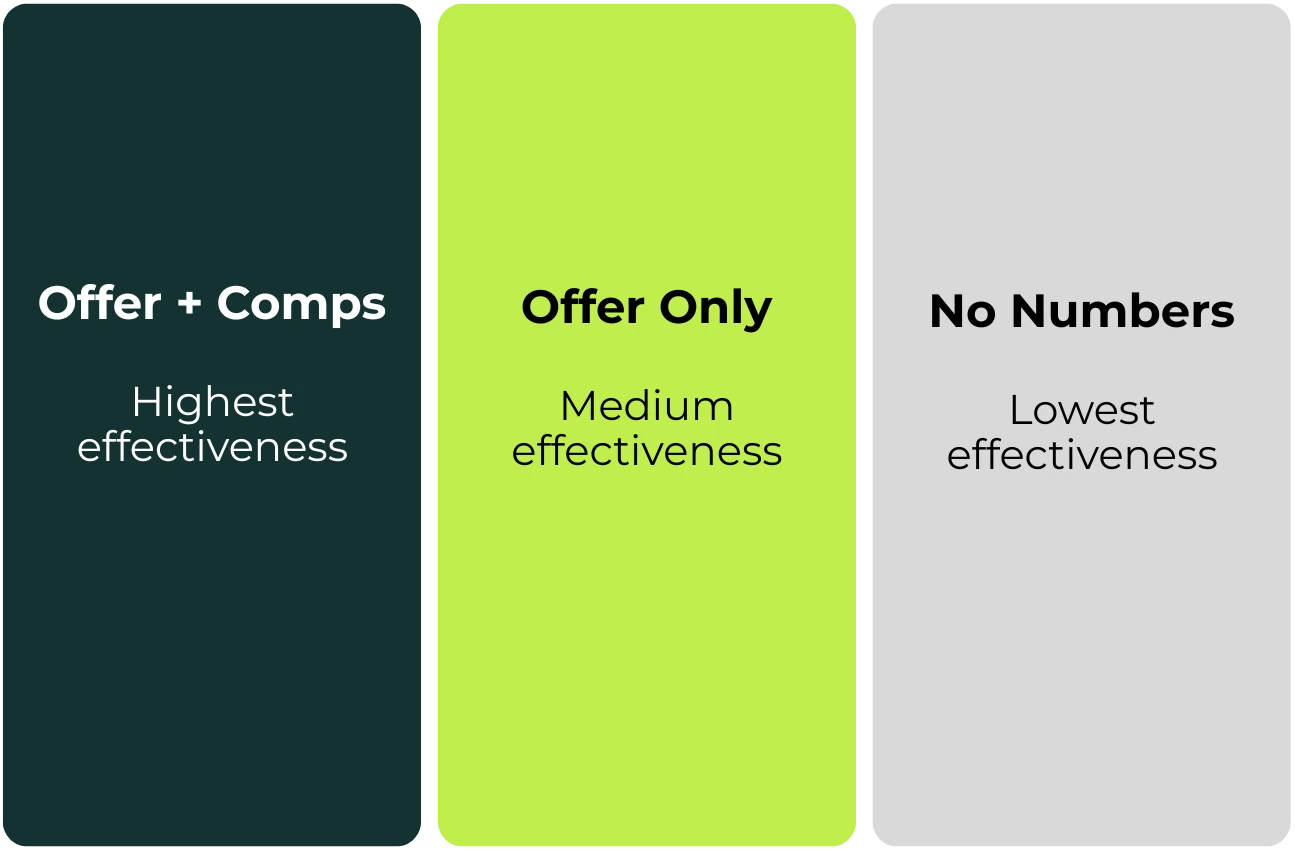
They tested three levels of personalization:
- Most effective: a direct offer on the home with neighborhood comps
- Second: a direct offer on the home only
- Least effective: no numbers at all, used when data quality was uncertain
A plain letter in an envelope consistently beat glossy postcards. For a financial product involving hundreds of thousands of dollars, homeowners valued credibility and discretion over flash.
Measuring impact without perfect models
Attribution was never perfect, but the team created a stack that delivered confidence.
- Address matchback: inbound leads were matched to mailed addresses, using a 60-day window to account for the reality that mail sits on fridges and tables.
- Unique codes and QR: later added as additional signals but not relied on early.
- Holdout groups: a permanent group of customers never received mail, which created a baseline for measuring incremental lift.
The biggest shift was moving from cost per lead to customer acquisition cost. Leads looked expensive, but conversions were higher. When measured at the customer level, mail was one of the most efficient channels.
Building the program step by step
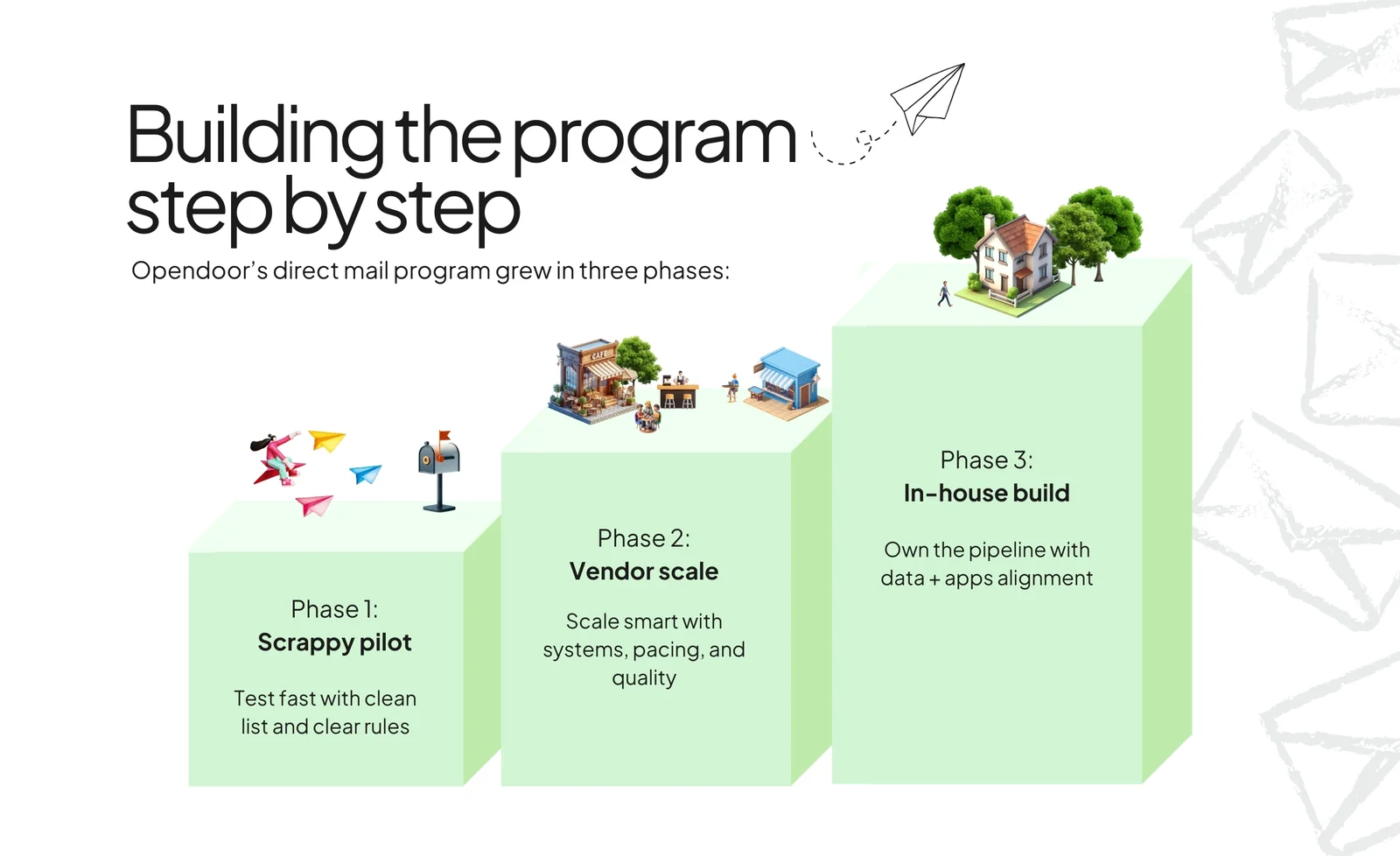
Opendoor’s direct mail program grew in three phases.
Phase 1: Scrappy pilot
- Pull a clean target list with a data partner or an internal analyst.
- Use a direct-mail vendor with variable fields to inject offers and comps.
- Launch small, log every record mailed, and set your matchback rules in advance.
Phase 2: Vendor scale
- Systematize list refresh, creative variants, and QA.
- Add market-by-market pacing to avoid remailing the same household inside a month.
- Expand personalization only when data accuracy clears a high bar.
Phase 3: Bring key parts in-house
- When vendor overhead and data latency start hurting CAC, make the case to own the pipeline.
- Invest in data engineering and dedicated ops. Mail works only when marketing, data science, and data engineering move together.
Market and segment lessons
Not all homes responded equally. Lower-value homes converted better on average, although fees and competitiveness also mattered.
Markets needed to be managed like a portfolio. Direct mail was strong in some cities but weaker in others. Comparing across markets and within each market against other channels showed where to double down.
Ideas like targeting change-of-address lists or trustee records seemed promising but rarely scaled. The most consistent results came from focusing on clean property data and disciplined targeting.
When startups should use direct mail
Andrea advises that direct mail only makes sense if the company already runs on data. If accurate records and data science are part of the business, mail can be explored early. If not, it is better to wait until those capabilities are in place.
Direct mail is also a good option when:
- The audience is not purely digital native, such as homeowners or small business owners
- The product requires explanation or education that benefits from a letter format
- The company wants more independence from partner-driven go-to-market strategies
When these conditions exist, direct mail becomes a powerful way to diversify the media mix.
Tactics to apply right away
- Start with a 10,000-household test, three creative tracks, and a 60-day attribution window
- Maintain a holdout group of at least 10 to 20 percent of the list
- Judge the channel by customer acquisition cost, not cost per lead
- Limit remails so no household receives more than one piece in 30 days
- Keep the creative simple with one clear offer and one call to action



Growth doesn’t happen by accident
It happens when you hire right. We’ll pair you with top global marketing talent in three weeks or less.